Everybody Lies: Self-Deception in the Search for Connection
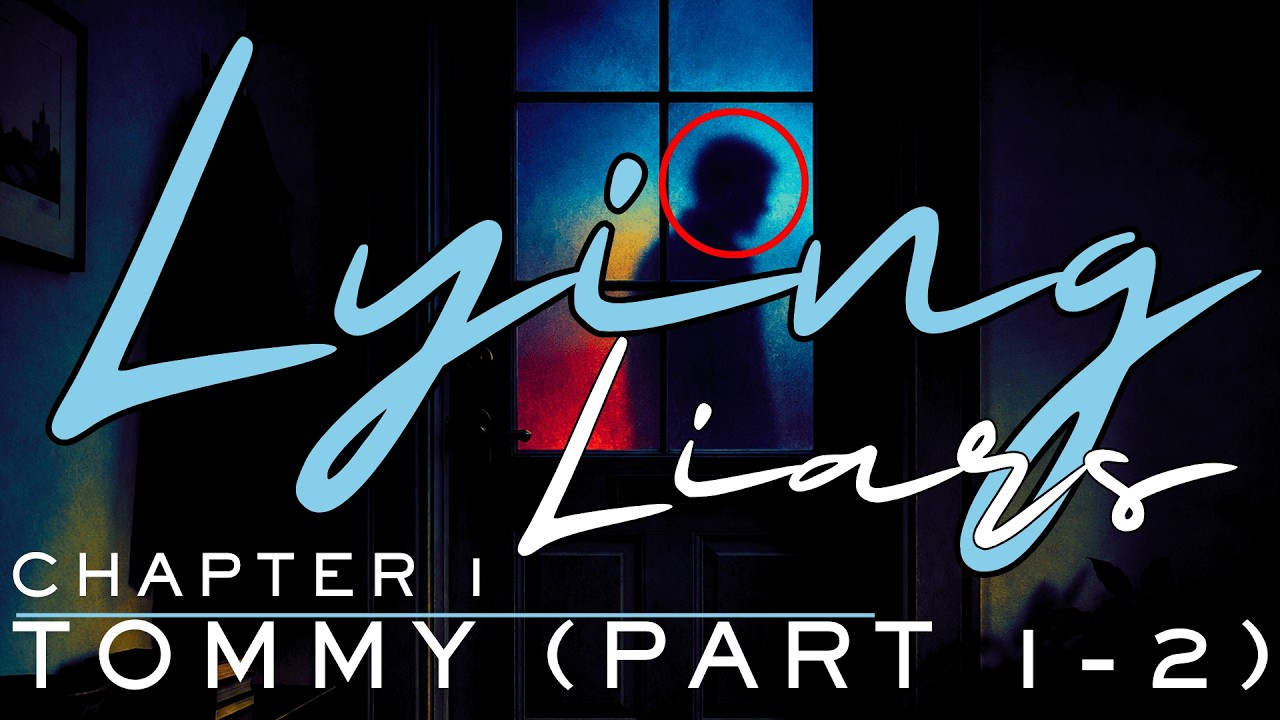
Welcome back to the blog, everyone. Today, we are diving deep into a topic that makes us all squirm just a little bit in our seats. Human beings are social creatures, wired for connection, community, and belonging. Yet, in our pursuit of being loved, understood, and accepted, we often resort to a peculiar defense mechanism: we lie. We craft versions of ourselves that we think the world wants to see. We smooth over our rough edges, hide our insecurities, and edit our histories until the person looking back at us in the mirror is practically a stranger. But what happens when those little white lies designed to make us more palatable become our entire reality? Where is the line between healthy social filtering and losing your true self entirely? These are the heavy, uncomfortable questions we tackle in today's post, and they form the beating heart of our latest podcast discussion. If you want to explore this topic further through the lens of fiction, trauma, and late-night confessions, make sure to check out the accompanying episode, Lying Liars. Chapter 3. Donnie and the Lies We Tell About Who We Are, Together.
Donnie and the Illusion of Sudden Luck
To understand the mechanics of self-deception, we often need to look at specific characters and archetypes that walk into our lives, carrying red flags wrapped in charming packaging. Enter Donnie. Picture this: a charming, seemingly thoughtful guest shows up, cleans your apartment, meticulously folds your laundry, and promises you the world—or at least round three. In the moment, it is terribly easy to fall into the trap of believing in sudden, miraculous shifts in your luck. You want to believe that the universe has finally decided to send you a good guy, a fixer of messes, a soothing balm to your weary soul.
However, whenever someone storms into your life and offers you an idealized fantasy too quickly, a very specific internal alarm bell should go off. Do you trust this sudden influx of domestic bliss and romantic promise, or do you quietly walk over to the kitchen counter to check if your car keys, wallet, and dignity are still safely where you left them? The illusion of sudden luck is frequently the first and most seductive lie we tell ourselves. We ignore our intuition because the alternative—admitting that this is yet another toxic dynamic disguised as romance—is simply too painful to face. We choose the lie because the truth feels like a lonely burden.
The Gap Between the Public Persona and the Private Self
We all maintain a gap between the public persona we project to the world and who we actually are when we are locked behind closed doors, sitting alone in the dark. The public persona is polished, resilient, funny, and unfazed by life's cruelties. It is the version of you that shows up to work on time, posts carefully curated snapshots on social media, and smiles politely at parties while screaming on the inside.
The private self, on the other hand, is messy, contradictory, exhausted, and desperately yearning. It is the person who eats cereal out of a measuring cup standing over the sink at midnight and replay every awkward conversation from 2014 in their head. The danger arises not from having a public persona—which is a normal, healthy part of navigating a complex society—but from completely abandoning the private self to appease the crowd. When you spend too much time performing a character for an audience, you eventually forget your own lines. You begin to believe your own marketing, adopting the fake traits of your persona as your actual identity, leaving your authentic needs completely unmet and ignored.
Trauma Loops, Codependency, and Late-Night Parking Lots
Why do we do this to ourselves? Why do we continually walk back into the burning buildings of our own making? The answer usually lies in the sticky, unrelenting web of trauma loops and codependency. When you are conditioned from an early age to believe that your worth is tied to your utility—to how well you can keep the peace, manage other people's emotions, or fix a broken partner—you end up stuck in a repetitive cycle of bad choices.
Think about the settings where these realizations often hit us. They rarely happen in broad daylight in a therapist's office; instead, they usually arrive in cinematic, gritty locations. We are talking about the fluorescent-lit aisles of a convenience store or the damp asphalt of a late-night Circle K parking lot at 3:00 AM. It is in these mundane, lonely spaces that the illusion cracks. You are sitting in the passenger seat of a car belonging to someone who doesn't really know you, let alone love you, and the silence is deafening. You realize you are trapped in a trauma loop, repeating the exact same patterns with a different face, desperately hoping for a different ending. It is a harsh wake-up call, exposing the thin, fraying line between genuine healing and deeply ingrained self-deception.
When Self-Deception Becomes Your Entire Reality
The most terrifying aspect of lying to make yourself palatable is the insidious nature of the habit. It doesn't happen all at once. It happens incrementally, like erosion wearing away a cliffside over decades. You compromise a boundary here, swallow an opinion there, pretend to like a band you hate, and accept bare-minimum treatment because you are terrified of being abandoned.
Before you know it, self-deception is no longer a tool you use to survive a social interaction; it is your entire reality. You are living a life that belongs to a ghost. Your friends love a version of you that doesn't exist. Your partners love a caretaker, not a person. And you? You wander through your own existence like an unwelcome visitor in a house built by someone else. Breaking out of this reality requires a monumental amount of courage because it demands that you face the ultimate fear: What if I stop lying, show my true, messy, complicated self, and nobody stays? That is the crucible through which true self-discovery must pass.
Conclusion: The Desperate Search for Genuine Connection
At the end of the day, all of our elaborate facades, our tolerance for toxic dynamics, our late-night parking lot epiphanies, and our curated personas boil down to one universal human drive: the desperate search for genuine connection. We lie because we are scared that if people see the raw, unedited truth of who we are—with all our scars, neuroses, and failures—they will turn away. We trade authenticity for acceptance, failing to realize that fake acceptance leaves us just as lonely as rejection ever could.
Unraveling these complex webs of deceit, trauma loops, and the ghosts of our past is never easy, but it is the only way forward if we ever want to experience real intimacy with ourselves and others. We have only just scratched the surface of this messy human experiment, and there is so much more to unpack. To hear a fictionalized, deeply honest exploration of these exact themes—complete with questionable guests, folding laundry, and hard truths—you need to listen to the full audio experience. Dive right into the conversation and unpack the psychology of our facades by listening to Lying Liars. Chapter 3. Donnie and the Lies We Tell About Who We Are, Together. Remember: everybody lies eventually, but you don't have to spend the rest of your life living one.